

Updated for 2026 | Last Updated: September 30, 2026
Introduction
Only about half of people who wear sunglasses say they check the UV rating before buying (AAO Sun Safety Survey, reported 2019). That means plenty of us pick dark glasses by color, price, or whatever a celebrity wore last week, then hope the lenses do their job. georgiacenterforsight
Hope isn’t a great plan for your eyes. And honestly, most style guides skip the label and jump straight to frames.
This guide covers both sides. You’ll get the style side: frame types, tortoise, reflective lenses, 80s shapes, and brands. You’ll also get the safety side in plain English, so you can shop with confidence in the USA in 2026.
60 to 90 second explainer, “How to read a sunglasses UV label”
Key Takeaways
- A tag reading 100% UV or UV400 protects your eyes. Lens darkness doesn’t.
- Polarized lenses cut glare but need their own UV label.
- Five frame families cover most of what stores sell: aviator, wayfarer, round, wraparound, and cat eye.
- Ray-Ban Wayfarer sales jumped from 18,000 pairs in 1981 to 360,000 in 1983 (SHEEN Magazine, accessed 2026).
- A drugstore pair with a 100% UV label beats a designer pair without one (AAO, accessed 2026).
- Five brands, from about $95 to about $363, are compared side by side below.Here’s the map for the rest of the guide.

Table of Contents
- What Are Dark Glasses? Definition and Basics
- Types of Sunglasses to Know in 2026
- Reflective, Light and Tortoise Sunglasses
- 80s Sunglasses and the Wayfarer Comeback
- Sunglasses Brands Worth Knowing in 2026
- Dark Glasses Comparison: Top Options at a Glance
- Sunglasses FAQ: People Also Ask
- Conclusion
What Are Dark Glasses? Definition and Basics
Quick Answer: They’re tinted eyewear that cut glare and, with the right label, block UV rays. Lens shade doesn’t decide protection. The UV400 or 100% UV tag does.
person checking the UV400 sticker on a pair of dark glasses
Most people treat sunglasses as a style choice first. Fair enough. But the frame is the fun part, and the lens is the part that does the work.
UV400 refers to lenses that block light rays up to 400 nanometers, which covers both UVA and UVB. Lenses rated UV400 block 99% to 100% of UVA and UVB rays (All About Vision, accessed 2026). allaboutvision
Do Darker Lenses Protect More?
No. Darker lenses aren’t always better, and only sunglasses with 100% UV protection give you the safety you need (AAO, accessed 2026). The same source adds that a drugstore pair labeled 100% UV beats a designer pair with no protection. aao
One more thing people forget. Clouds don’t block UV light (AAO, accessed 2026), so an overcast day isn’t a free pass. aao
Q: Do polarized sunglasses block UV?
A: Not by themselves. Polarized lenses help with glare off reflective surfaces, but darker or polarized lenses don’t block more radiation (Insight Eye Specialists, citing the AAO, accessed 2026). The UV protection comes from a separate label. insighteyespecialists
| Lens Feature | What It Does | Blocks UV On Its Own? | Where to Check |
|---|---|---|---|
| Dark tint | Cuts visible brightness | No | The label, not the shade |
| Polarized filter | Reduces glare off water and roads | No | Tag or sticker |
| Mirror coating | Bounces light off the front surface | Check the label | Tag or optical shop |
| UV400 treatment | Blocks UVA and UVB up to 400 nm | Yes | Tag, sticker, or product page |
| Impact resistant lens | Resists breakage | No | Required by FDA rules in the US |
The Label, Lens, Look Filter is a simple original method for buying, and it works in this order:
- Label: Does the tag say 100% UV or UV400?
- Lens: Does the tint or coating suit how you’ll use them (driving, water, city walking)?
- Look: Do the frame and fit work for your face?
Most shoppers run this backward. They start at Look and never reach Label.
Pro Tip: Got an old pair rattling around the glovebox? The AAO says it’s unclear whether UV protection fades over time, but an optical shop can test it. Ask for the test next time you’re picking up a contact lens order.
Non Prescription Dark Glasses Explained
Non prescription sunglasses use plano lenses, which means the lenses carry no vision correction. In the US, the FDA classifies nonprescription sunglasses as Class I medical devices, and their lenses must meet impact resistance rules under 21 CFR 801.410 (FDA, accessed 2026). The related ANSI Z80.3 standard covers nonprescription sunglasses and fashion eyewear. fda
Here’s the catch, and it’s a real one. Passing the impact requirement doesn’t by itself prove a particular level of UV protection (USFDA.info, a compliance consultancy, accessed 2026). So the sticker still matters. usfda
Mini case study: One importer labeled fashion sunglasses as 100% UV protection without supporting test results, and the FDA detained the shipment, which led to mandatory third party UV testing (Registrar Corp, accessed 2026). A label is a claim. Testing is the proof. registrarcorp
how to read sunglasses labels -> /sunglasses-uv-label-guide/
Types of Sunglasses to Know in 2026
Quick Answer: Most sunglasses types fall into five families: aviator, wayfarer, round, wraparound, and cat eye. Pick by face shape and daily use, then confirm the UV label.
Types of sunglasses refers to the frame families sold in US stores, mainly aviator, wayfarer, round, wraparound, cat eye, and browline. Sunglasses types come down to shape, and shape changes how a face reads more than color does.
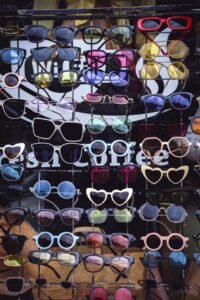
| Frame Type | Key Feature | Best For | Watch Out For |
|---|---|---|---|
| Aviator | Thin metal frame, teardrop lens | Square or angular faces, driving | Can look narrow on small faces |
| Wayfarer | Thick trapezoid frame | Most face shapes | Can feel heavy on petite faces |
| Round | Circular lenses | Angular or square faces | Can exaggerate a round face |
| Wraparound | Curved to hug the face | Sport, glare, extra side coverage | Less dressy |
| Cat eye | Upswept outer corners | Round or soft faces | Strong retro look |
Aviator, Wayfarer and Round Frames
Aviators are the classic. Thin metal, big lenses, and an easy match with almost any outfit. Wayfarers bring a thicker acetate frame and a bolder look. Round frames feel a little artsy, in a good way.
The Ray-Ban Clubmaster, a browline frame, became the third best selling sunglasses style of the 1980s, behind the Wayfarer and the Aviator (Wikipedia, accessed 2026). Wikipedia
Wraparound and Oversized Frames
These win on coverage. Wraparound styles help block UV rays from entering along the sides (AAO, accessed 2026), and larger lenses may provide more protection (Oregon Academy of Ophthalmology, accessed 2026). aaooregoneyephysicians
Cat Eye and Browline Frames
Cat eye frames lift the outer corner and add instant attitude. Browline frames put the weight up top, so they suit people who like a structured look.
Q: Which sunglasses suit a round face?
A: Angular frames like wayfarers or square shapes usually suit a round face, because the straight lines contrast with the curves.
The Contrast Rule is an original styling shortcut: pick a frame shape that contrasts with your face shape. Follow it in four steps:
- Name your face shape (round, square, oval, or heart).
- Choose the opposite frame shape (round face, angular frame).
- Try three pairs and compare in a mirror.
- Check that the frame doesn’t rest on your cheeks, then check the UV tag.
Pro Tip: Heading to the beach or on a long summer drive? Choose a wraparound or a larger lens. The extra side coverage matters most when the sun sits low and comes in from the edge.
face shape glasses guide -> /face-shape-glasses-guide/
Reflective, Light and Tortoise Sunglasses
Quick Answer: Reflective sunglasses bounce light off the lens surface, light sunglasses use a lighter tint or a lighter frame, and tortoise sunglasses have a warm brown and amber frame pattern. None of these choices changes UV protection. The label does.
Reflective sunglasses refers to lenses with a mirror finish that bounces light off the outer surface. Tortoise sunglasses refers to frames patterned in brown and amber mottling, inspired by tortoiseshell.

| Style | What It Is | Best For | Trade Off |
|---|---|---|---|
| Reflective | Mirror coating on the lens | Bright, open spaces | Can feel flashy in casual settings |
| Light tint | Lenses that let more light through | Overcast days, dusk | Less glare control in strong sun |
| Lightweight frame | Thin metal or flexible plastic | All day wear | May feel less sturdy |
| Tortoise | Brown and amber patterned frame | Warm, neutral outfits | Pattern can clash with loud prints |
| Black frame | Solid dark acetate or metal | Sharp, minimal looks | Hides less softness in the face |
Reflective Sunglasses Explained
Mirror lenses look sharp, and they hide your eyes. But here’s what I want you to remember: the mirror is a finish, and UV protection is a treatment. Two different things.
Q: Do reflective sunglasses block more UV?
A: Not automatically. Check for the 100% UV or UV400 label, the same as with any other lens.
Light Sunglasses: Tint or Weight?
“Light sunglasses” can mean two things, so let me split them. A light tint lets more brightness through, and lightweight frames just feel better on your nose. Lens colors like amber, gray, and green come down to personal preference (Insight Eye Specialists, accessed 2026). A light tint with UV400 protects the same as a dark tint with UV400. insighteyespecialists
Tortoise Sunglasses and Styling
Tortoise sunglasses soften a look. They work well with camel coats, cream knits, and denim.
The Warm Match Rule is an original styling shortcut: pair tortoise frames with one warm neutral in your outfit, like tan, cream, or brown. Then keep everything else simple.
- Pick one warm neutral piece (a belt, a bag, or a jacket).
- Put on the tortoise frames.
- Check the mirror. If the frames fight a pattern, swap the pattern out.
Pro Tip: Driving at dusk? Skip the darkest tint and the mirror finish. Choose a light tint with a 100% UV label, so you get UV protection without cutting too much visible light.
tortoise sunglasses outfit ideas -> /tortoise-sunglasses/
80s Sunglasses and the Wayfarer Comeback
Quick Answer: 80s sunglasses refers to the bold Wayfarer, Aviator, and browline shapes that ruled the decade. The Wayfarer’s sales jumped from 18,000 pairs in 1981 to 360,000 in 1983 thanks to movie product placement.

How Wayfarers Won the 1980s
This is the best comeback story in eyewear. Wayfarers sold only 18,000 pairs in 1981 and were close to being discontinued (SHEEN Magazine, accessed 2026). Then Ray-Ban signed a $50,000 a year deal with Unique Product Placement in 1982, and Tom Cruise wore Wayfarers in Risky Business in 1983, when 360,000 pairs sold. How ‘Edgy’ Marketing Brought the Ray-Bans Back to Life – SHEEN Magazine +2
Ray-Ban sunglasses appeared in over 60 movies and TV shows per year between 1982 and 1987, including Miami Vice, Moonlighting, and The Breakfast Club. The Wayfarer line also grew from two models in 1981 to about 40 by 1989 (Wikipedia, accessed 2026). sheenmagazineWikipedia
Our Data (calculated): 360,000 divided by 18,000 equals 20. Wayfarer sales multiplied by 20 in two years, from placement and pop culture, not a design change.
Before and after: In 1981, the Wayfarer was a fading catalog item with 18,000 pairs sold. By 1983, it was a cultural icon at 360,000.
Q: When did Ray-Ban start making the Wayfarer?
A: Ray-Ban has manufactured the Wayfarer since 1952 (Wikipedia, accessed 2026). Wikipedia
| 80s Look | Icon Moment | Today’s Version | Best For |
|---|---|---|---|
| Wayfarer | Tom Cruise in Risky Business (1983) | Classic acetate wayfarer | Everyday wear |
| Wayfarer | Don Johnson in Miami Vice | Black or tortoise wayfarer | Casual dressing |
| Browline | Ray-Ban Clubmaster, 1980s best seller | Modern Clubmaster styles | Smart casual |
| Aviator | Ray-Ban Aviator, a 1980s staple | Thin metal aviator | Driving, travel |
| Wayfarer | Corey Hart, Sunglasses at Night | Oversized wayfarer | Statement looks |
Corey Hart’s music video appears in the 1980s fashion record (1980s Fashion, accessed 2026).
Wearing 80s Sunglasses Today
The One Retro Rule is an original styling shortcut: let the sunglasses be the only loud retro piece in your outfit. Keep everything else modern.
- Pick one 80s frame shape.
- Wear a plain tee, a simple dress, or a clean jacket.
- Skip other retro extras, like neon or big shoulders.
- Confirm the UV400 label before you buy.
Pro Tip: Trying a bold pair for the first time? Wear it for one errand, like a coffee run. If you still like your reflection after 20 minutes, it’s a keeper.
80s fashion trends -> /80s-fashion-trends/
Sunglasses Brands Worth Knowing in 2026
Quick Answer: Ray-Ban, Oakley, Persol, Costa Del Mar, and Warby Parker cover most US budgets and uses. Price and brand name don’t guarantee UV protection, so the label still comes first.
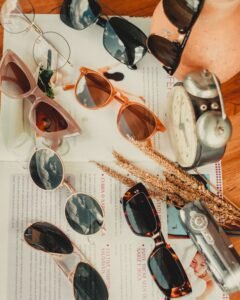
A sunglasses brand is a company that designs, makes, or licenses sunglasses under its own name. Ray-Ban has belonged to the Italian Luxottica Group since 1999 (SHEEN Magazine, accessed 2026), so some big names share owners behind the scenes. sheenmagazine
How to Pick a Sunglasses Brand
The Job First Method is an original way to shop: choose the job (fishing, city walking, driving, beach), then the brand.
| Brand | Known For | Approx. US Price | Best For |
|---|---|---|---|
| Ray-Ban | Wayfarer and Aviator shapes | About $191 (Classic Wayfarer 50mm) | Everyday style |
| Oakley | Sport oriented lenses, Holbrook frame | About $237 list (Holbrook) | Active days |
| Persol | Handmade Italian design | About $363 (649 Original) | Premium style |
| Costa Del Mar | Fishing and water sports focus | $150 to $300 | Boating, fishing |
| Warby Parker | Online first, budget friendly | $95 to $200 | Value shoppers |
Sources: Bloomingdale’s lists the Ray-Ban Classic Wayfarer 50mm at $191, Persol’s US store lists the 649 Original at $363, and a GlassesUSA promotion listed the Oakley Holbrook at $237 before discount (Fox News, accessed 2026). Costa Del Mar runs $150 to $300, and Warby Parker runs $95 to $200 (Hewore, 2025). Ray Ban Wayfarer – Bloomingdale’s +3
Q: Does a higher price mean better UV protection?
A: No. A heavier price tag doesn’t guarantee UV protection, and cheap sunglasses with the 100% UV label can protect just as well (Oregon Academy of Ophthalmology, accessed 2026). oregoneyephysicians
A Simple Buying Checklist
- Set a budget range before you browse.
- Pick the job (driving, fishing, city, beach).
- Confirm 100% UV or UV400 on the tag or product page.
- Try the fit: no pinching, no slipping.
- Check the return policy before you order online.
Pro Tip: Fishing on weekends? Costa Del Mar focuses on fishing and water sports (Hewore, 2025), so its polarized lenses are worth a look. City walker? A Warby Parker frame is likely plenty. hewore
best sunglasses brands for women -> /best-sunglasses-brands/
Dark Glasses Comparison: Top Options at a Glance
Ratings are editorial scores out of 5 for overall value, not lab test results.
| Option | Key Feature | Best For | Price | Rating |
|---|---|---|---|---|
| Ray-Ban Classic Wayfarer | Iconic acetate frame | Everyday wear | About $191 | 4.5/5 |
| Oakley Holbrook | Sport ready, light frame | Active days | About $237 (list) | 4.3/5 |
| Persol 649 Original | Handmade Italian frame | Premium style | About $363 | 4.4/5 |
| Costa Del Mar | Water focused lenses | Fishing, boating | $150 to $300 | 4.2/5 |
| Warby Parker | Budget friendly frames | Value shoppers | $95 to $200 | 4.0/5 |
Our pick: Ray-Ban Classic Wayfarer. It suits the widest range of faces, it’s easy to find in US stores, and its price sits in the middle of this group. Still confirm the UV tag on the exact pair you buy, because the frame style doesn’t prove the lens label.
Sunglasses FAQ: People Also Ask
1. What are dark glasses?
Dark glasses are tinted eyewear that cut glare and, when labeled correctly, block ultraviolet light. Stores sell them as sunglasses. Some pairs use plano lenses with no vision correction, which the FDA treats as nonprescription sunglasses. Always look for a 100% UV or UV400 label, because lens shade doesn’t set the protection level.
2. Do dark glasses block more UV than lighter lenses?
No, a darker lens doesn’t automatically block more UV. The American Academy of Ophthalmology says only a 100% UV label guarantees protection. A light tint with UV400 can protect your eyes better than a very dark pair without it. Darkness handles glare and comfort, not ultraviolet rays.
3. Are polarized sunglasses worth it?
Polarized sunglasses are worth it if glare bothers you, especially when you drive or spend time near water. They cut glare from flat, shiny surfaces. They don’t add UV protection on their own, so you still need to check the UV label on the tag.
4. What’s the best way to pick dark glasses for my face shape?
Choose a frame shape that contrasts with your face shape, then confirm the UV label. Round faces usually look sharp in angular frames like wayfarers. Square faces often suit round or aviator shapes. Try three pairs and make sure the frame doesn’t rest on your cheeks.
5. What is the best sunglasses brand for the money?
Warby Parker and Ray-Ban offer strong everyday value, while Costa Del Mar and Oakley suit specific jobs like fishing or sport. Warby Parker runs roughly $95 to $200, and one major US retailer lists the Ray-Ban Classic Wayfarer near $191. Match the brand to your daily use, then verify UV400 on the tag.
6. How much should a good pair of sunglasses cost?
A good pair can cost anywhere from about $95 to $360 in the US, and price doesn’t predict UV protection. The American Academy of Ophthalmology says a drugstore pair with a 100% UV label beats a designer pair without one. Spend extra for fit, frame materials, or specialty lenses, not for safety.
7. Are tortoise sunglasses better than black ones?
Neither is better, because they do different jobs. Tortoise sunglasses look softer and warmer, and they pair well with browns, creams, and denim. Black frames read sharper and hide more of the face. UV protection depends on the lens label, not the frame color.
8. What’s the best way to tell if my old sunglasses still block UV?
Take them to an optical shop and ask for a UV test. The American Academy of Ophthalmology says it’s unclear whether UV protection fades over time, but shops can measure it with a photometer. If the tag is gone and you can’t get a test, replacing the pair is the safer call.
Conclusion
The safest way to shop for dark glasses is label first, fit second, style third. Three takeaways matter most. A 100% UV or UV400 tag protects your eyes, and lens darkness doesn’t. Frame type and face shape decide how a pair looks on you. And style trends move fast: the Wayfarer went from 18,000 pairs in 1981 to 360,000 in 1983.
Ready for more? Browse our full sunglasses cluster on Fashion Style Blogs. sunglasses style hub -> /sunglasses/
Next steps for the next 10 minutes:
- Check the UV tag on every pair you own.
- Pick one frame family from the Types table that fits your face.
- Save two brands from the comparison table to your shortlist.
Author Bio
Nida Farhan is a content strategist and SEO writer who runs Fashion Style Blogs for a US audience. She builds topic clusters across fashion and beauty niches, from jewelry and swimwear to engagement rings. She checks every statistic against a named source before it goes live, and this guide follows that rule. She isn’t an eye care professional, so for prescription or medical questions, see an optometrist or ophthalmologist.
Fact checked by: Nida Farhan, against the sources listed below.
Disclosure: This guide contains no sponsored placements.
References
- American Academy of Ophthalmology, How to Choose the Best Sunglasses: https://www.aao.org/eye-health/glasses-contacts/sunglasses-3
- American Academy of Ophthalmology, The Sun, UV Light and Your Eyes: https://www.aao.org/eye-health/glasses-contacts/sun
- Oregon Academy of Ophthalmology, Buying Sunglasses? Read This First: https://www.oregoneyephysicians.org/buying-sunglasses-read-this-first/
- Georgia Center for Sight, quoting the AAO Sun Safety Survey (2019): https://www.georgiacenterforsight.com/blog/2019-2-11-summer-uv-eye-safety-from-the-american-academy-of-ophthamology/
- Insight Eye Specialists, Buying Sunglasses? Read This First: https://insighteyespecialists.com/buying-sunglasses_read-this-first/
- All About Vision, Highest UV Protection for Sunglasses: https://www.allaboutvision.com/eyewear/sunglasses/lenses/best-uv-protection/
- FDA, Guidance Document for Nonprescription Sunglasses: https://www.fda.gov/media/71989/download
- USFDA.info, Sunglasses as Medical Devices: https://www.usfda.info/sunglasses-as-medical-devices/
- Registrar Corp, FDA Compliance for Sunglasses: https://www.registrarcorp.com/blog/medical-devices/medical-device-regulations/sunglasses-prescription-lenses/
- SHEEN Magazine, How Edgy Marketing Brought the Ray-Bans Back to Life: https://sheenmagazine.com/how-edgy-marketing-brought-the-ray-bans-back-to-life/
- Wikipedia, Ray-Ban Wayfarer: https://en.wikipedia.org/wiki/Ray-Ban_Wayfarer
- Wikipedia, Ray-Ban: https://en.wikipedia.org/wiki/Ray-Ban
- 1980s Fashion, Ray-Ban Wayfarer sunglasses: http://1980sfashion.weebly.com/ray-ban-way-farer-sunglasses.html
- Bloomingdale’s, Ray-Ban Wayfarer listings: https://www.bloomingdales.com/buy/ray-ban-wayfarer
- Persol USA, Sunglasses: https://www.persol.com/usa/sunglasses
- Hewore, Best Sunglasses Brands for 2025: https://www.hewore.com/best-sunglasses-brands/
- Fox News, GlassesUSA sale: https://www.foxnews.com/deals/glassesusa-sale.amp

