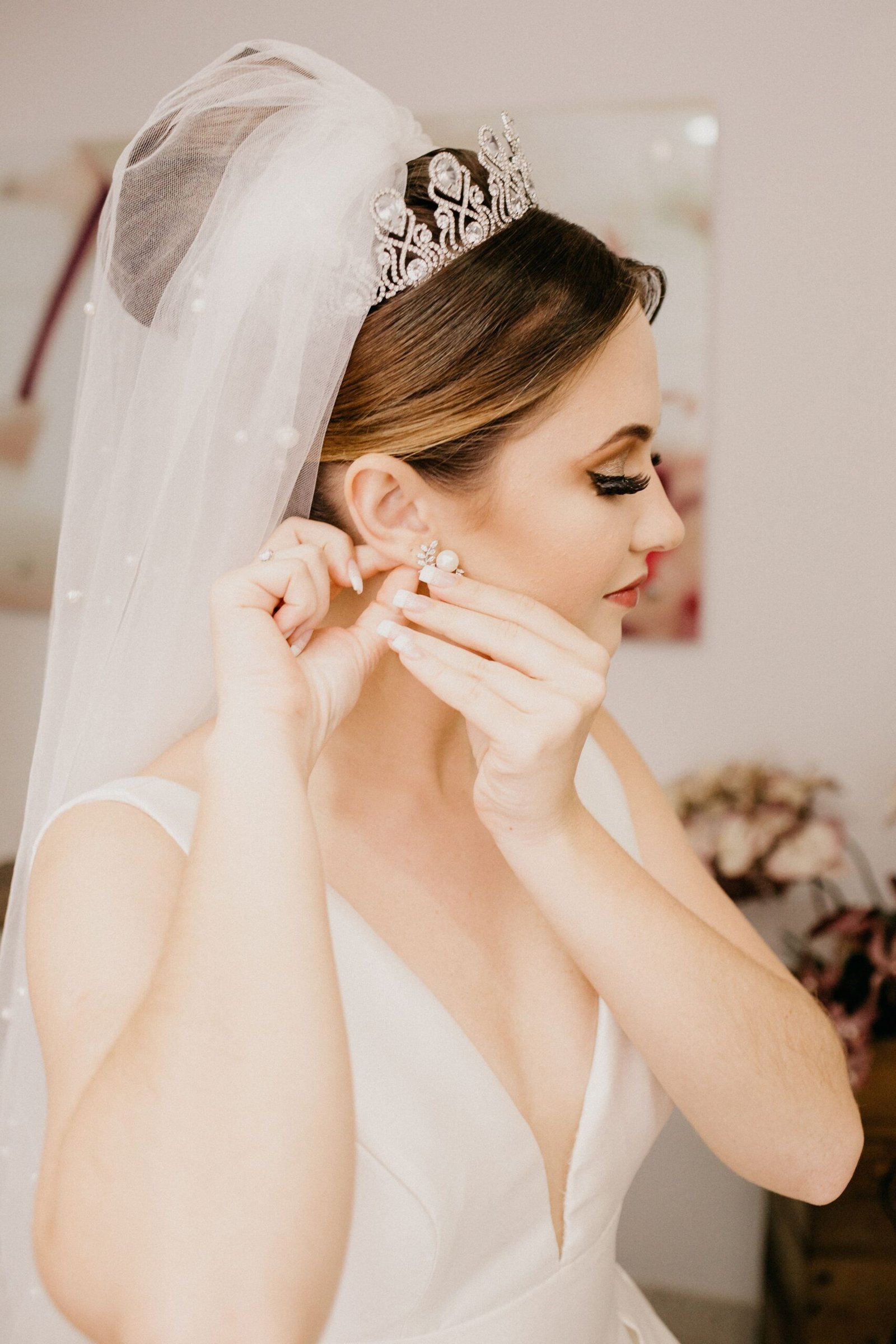
Last Updated: August 25, 2026 Disclosure: This article contains no affiliate links. It is independent editorial content. Fact checked by: Fashion Style Blogs editorial team
Earrings now hold roughly 45 percent share of the entire diamond jewelry market in 2026, making them the single most purchased diamond category worldwide, according to Future Market Insights. A huge slice of that demand is going to one small, unassuming shape, the huggie. Diamond huggie earrings sit close to the lobe, catch light from every angle, and work with almost anything you already own, which is exactly why they have become the default upgrade pick for shoppers who want real diamonds without the price tag of a ring.
This guide breaks down what diamond huggie earrings actually are, how they compare to full hoops and studs, what carat and gold choices make sense for your budget, and how to avoid the mistakes that waste money on this purchase. It also covers pricing, sizing, and the FAQs that most buyers search before checking out.
In this guide you will learn:
- What diamond huggie earrings are and how they differ from hoops
- Which carat and gold combinations offer the best value in 2026
- A simple framework for choosing the right size for your ear
- Common buying mistakes and how to avoid them
- How diamond huggies compare against studs and dangle earrings
- Answers to the most searched questions buyers ask before purchase
Here is the full breakdown, starting with a clear definition.
Table of Contents
- What Are Diamond Huggie Earrings
- Why Diamond Huggie Earrings Matter in 2026
- How to Choose Diamond Huggie Earrings Step by Step
- Best Diamond Huggie Earring Styles and Options
- Diamond Huggie Earrings vs Hoops and Studs
- Common Mistakes to Avoid When Buying Diamond Huggie Earrings
- Real World Example
- Frequently Asked Questions
What Are Diamond Huggie Earrings
Diamond huggie earrings are defined as small hoop style earrings, typically between 5 and 12 millimeters wide, that sit snug against the earlobe and are set with diamonds along the outer band. Unlike traditional hoops, which swing away from the ear, a huggie “hugs” the lobe closely, which is where the name comes from.
The huggie hoop earrings style became a wardrobe staple because it solves a real problem. Full size hoops can catch on scarves, hair, or phone calls. Huggies stay close to the head, so they read as polished in an office and still look intentional at dinner. Jewelry editors covering 2026 trends note that huggie earrings continue to dominate fashion thanks to their sleek, comfortable fit and effortless versatility.
Key Structural Parts
- The band: The metal ring that forms the hoop shape, usually 14K or 18K gold
- The hinge or clicker closure: How the earring opens and closes around the lobe
- The setting: Where the diamonds are placed, either pave across the full band or spaced in a line
- The post: The straight pin that passes through the piercing before the hoop locks shut
Pro Tip: If you have a first or second lobe piercing that sees daily wear, a hinged snap closure is easier to manage one handed than a lever back, especially first thing in the morning.

Why Diamond Huggie Earrings Matter in 2026
Diamond huggie earrings matter in 2026 because they sit at the exact intersection of two of the biggest jewelry trends of the year, comfort first design and everyday diamond wear. Jewelry retailers now describe huggies and small hoops as the most versatile everyday options, favored for being hypoallergenic and easy to wear from morning to night, according to trend coverage from James Michelle.
Three forces are driving this shift.
Self purchase behavior is rising. Industry research shows that 76 percent of women now prefer to buy jewelry for themselves rather than waiting for it as a gift, based on data reported by Stellar Market Research. That shift favors smaller, wearable diamond pieces like huggies over occasion only jewelry.
Lab grown diamonds have made real diamonds affordable. A one carat lab grown diamond retailed for about 855 dollars in 2025, roughly 20 to 40 percent less than a comparable mined stone, per data from Fortune Business Insights. That price drop means a genuine diamond huggie is now within reach for buyers who once settled for cubic zirconia.
Ear stacking normalized diamonds as daily wear. Jewelry designers describe curated ear stacks, usually two to four pieces per ear, as one of the defining habits of 2026, with a huggie almost always acting as the anchor piece according to Gabriel and Co.
The Huggie Value Triangle
Here is an original framework worth knowing before you shop. Call it The Huggie Value Triangle. Every diamond huggie purchase balances three variables that pull against each other, carat weight, metal purity, and diamond placement density (pave versus spaced stones). Pushing one corner up usually pulls the other two down within a fixed budget. A shopper who wants heavier carats will typically need to accept a lower gold purity or a less dense pave setting to stay on budget, and vice versa. Understanding which corner matters most to you, sparkle, durability, or size, is the fastest way to shop with confidence instead of second guessing every listing.

How to Choose Diamond Huggie Earrings Step by Step
Choosing diamond huggie earrings does not need to be complicated if you follow a clear sequence. Here is the process jewelry consultants actually use with buyers.
Step 1: Set your carat total weight budget — In earrings, diamond weight is expressed as Carat Total Weight, or CTW, meaning the combined weight of both stones in the pair, not one, as explained by Washington Diamond. Decide your CTW range before you start browsing so pricing does not surprise you later.
Step 2: Choose your metal — 14K gold is more durable for daily wear, while 18K gold has a richer, deeper color but scratches more easily. White gold earrings and yellow gold both remain strong sellers in 2026, and mixed metal stacking means you no longer need to match every piece in your jewelry box.
Step 3: Decide on pave or spaced diamonds — Pave huggies have continuous sparkle across the whole band. Spaced stone huggies show more visible metal between diamonds and tend to cost less for the same CTW.
Step 4: Check the clarity grade realistically — Diamond earrings offer more flexibility here than rings because they are viewed from a distance rather than up close, so an eye clean stone in the VS2 to SI1 range looks flawless while keeping cost reasonable, per Washington Diamond’s buying notes.
Step 5: Confirm the closure type fits your lifestyle — Snap closures suit daily wear, while screw backs and lever backs suit active lifestyles or larger hoops that need extra security.
Step 6: Ask for grading documentation — GIA certification provides objective third party verification of the 4Cs for natural stones, and newer 2026 grading standards now cover lab grown diamonds too, according to Nekta New York.
Best Diamond Huggie Earring Styles and Options
Not every diamond huggie is built the same way. The table below compares the five most searched styles so you can see where your budget actually goes.
| Style | Key Feature | Best For | Typical Price Range | Rating |
|---|---|---|---|---|
| Pave Diamond Huggie | Continuous sparkle across the band | Daily wear, maximum shine | 400 to 1200 USD | 4.8 out of 5 |
| Classic Spaced Diamond Huggie | Visible metal between stones | Budget friendly diamond look | 250 to 700 USD | 4.5 out of 5 |
| Thick Chunky Diamond Huggie | Bold wider band, more metal | Statement everyday wear | 600 to 1800 USD | 4.6 out of 5 |
| 2 Carat Diamond Huggie | Larger total carat weight | Special occasion upgrade | 3000 to 9000 USD | 4.7 out of 5 |
| White Gold Hoops with Diamonds | Cool toned finish, hides slight yellow tint | Colorless stone lovers | 500 to 1500 USD | 4.6 out of 5 |
Winner: For most first time buyers, the Pave Diamond Huggie in 14K white gold offers the strongest balance of everyday durability, visible sparkle, and price per carat.
Diamond Heart Earrings and Other Shape Variations
Shoppers searching diamond huggies often also browse diamond heart earrings, which swap the plain hoop band for a heart shaped huggie silhouette. These sit in the same price bracket as classic pave huggies but appeal to buyers wanting a softer, more romantic shape rather than a strict circle.

Diamond Huggie Earrings vs Hoops and Studs
Is a huggie the same as a hoop? No. A huggie sits close and hugs the earlobe, while a full hoop has visible open space between the band and the ear, as clarified by Gabriel and Co’s 2026 trend guide.
How does a huggie compare to a stud? A diamond stud sits flat against the lobe with no band shape, while a huggie forms a small circular hoop around the lobe. Studs tend to show off a single larger stone, while huggies distribute smaller stones across a band for continuous sparkle.
Both hoops and huggies remain core 2026 styles, and many buyers now wear a huggie and a small hoop together in the same stacked look rather than choosing one over the other.
Common Mistakes to Avoid When Buying Diamond Huggie Earrings
Even experienced jewelry buyers make these errors with diamond huggie earrings.
- Buying the wrong diameter for your ear shape: A 12mm huggie can look oversized on a small lobe, while an 8mm huggie can disappear on a larger ear
- Ignoring the closure mechanism: A loose hinge closure loosens over years of daily wear and increases loss risk
- Choosing color grade over cut grade: Cut is the single factor most responsible for visible sparkle, more than color or clarity, according to Versani’s 2026 diamond guide
- Skipping the grading report: Without third party certification, buyers are relying purely on a seller’s word for quality
- Forgetting nickel allergies: Sterling silver and lower purity gold alloys can trigger reactions in sensitive ears, so buyers with allergies should confirm nickel free settings before purchase
Expert Insight: Cut grade should almost always be protected first when working within a fixed budget, because a poorly cut diamond looks flat and lifeless regardless of how high its color or clarity grade reads on paper.
Real World Example
A Fashion Style Blogs reader recently wrote in comparing two nearly identical looking huggie listings, one priced at 480 dollars and one at 1350 dollars, both labeled “0.50 CTW diamond huggie, 14K gold.” The difference came down to two things once she asked for documentation. The cheaper pair used spaced diamonds set only on the front facing half of the band, with the back half left bare, and carried no grading report. The pricier pair used continuous pave diamonds around the full circumference and included a GIA report confirming VS2 clarity. She chose the certified pair, and this kind of side by side comparison is exactly what The Huggie Value Triangle framework above is designed to help buyers catch before checkout, not after.
Frequently Asked Questions
What are diamond huggie earrings?
Diamond huggie earrings are small hoop earrings, usually 5 to 12 millimeters wide, set with diamonds and designed to sit close against the earlobe rather than swing away from it.
How much do diamond huggie earrings cost?
Diamond huggie earrings typically range from 250 dollars for spaced stone designs in lower carat weight up to 9000 dollars or more for 2 carat pave styles in 18K gold, depending on carat total weight, metal purity, and certification.
Are diamond huggie earrings worth it?
Yes for most everyday wearers, because huggies combine daily durability with visible sparkle, and current lab grown diamond pricing has made genuine diamond huggies affordable compared to a few years ago.
What is the difference between huggie hoop earrings and regular hoop earrings?
Huggie hoop earrings sit snug against the lobe with minimal open space, while regular hoop earrings hang with a visible gap between the band and the ear.
What are the best diamond huggie earrings for everyday wear?
Pave diamond huggies in 14K white gold or yellow gold are the best diamond huggie earrings for everyday wear because 14K gold resists scratching better than 18K, and continuous pave setting hides small amounts of daily wear.
Can diamond huggie earrings help with sensitive ears?
Yes, huggies set in nickel free 14K gold or platinum are generally safe for sensitive ears, though buyers with known allergies should always confirm the exact alloy before purchase.
What is a good carat size for diamond huggie earrings?
A 0.25 to 0.50 total carat weight huggie suits everyday wear, while 2 carat diamond earrings are better suited to special occasions or buyers wanting a noticeable statement piece.
How do I know if my diamond huggie earrings are real?
Ask for a grading report from GIA or IGI, since certified reports confirm the 4Cs for natural diamonds and verify quality standards for lab grown stones as well.
Conclusion
Diamond huggie earrings have earned their place as one of the most searched and most purchased styles of 2026 because they solve a real problem, everyday comfort combined with genuine diamond sparkle. The right pair comes down to balancing carat weight, metal purity, and diamond placement using the Huggie Value Triangle, then confirming cut quality and certification before you buy. Whether you choose a classic pave huggie, a bold chunky band, or a 2 carat upgrade for a special occasion, diamond huggie earrings remain one of the safest, most versatile diamond investments a wardrobe can hold in 2026.
Next Steps:
- Decide your carat total weight budget before browsing listings
- Ask any seller for a GIA or IGI grading report before purchase
- Try a pave diamond huggie in 14K white gold as your first everyday pair
Author Bio
Written by Nida Farhan, a content strategist and SEO writer specializing in fashion and beauty content, with hands on experience building jewelry content clusters covering earrings, engagement rings, and bridal jewelry categories for a US audience. This article was researched using current 2026 industry market reports and GIA educational resources, and all statistics are sourced and linked above for transparency.
Sources and References
- Future Market Insights, Diamond Jewelry Market Report 2026 to 2036
- Jewelry Market Statistics 2026
- GIA 4Cs of Diamond Quality
- Washington Diamond, Diamond Earrings Ultimate 2026 Style Guide
- Versani, Diamond Quality Guide 2026
- Gabriel and Co, Earring Trends Defining 2026
- Nekta New York, Connoisseur’s Guide to Diamond Stud Earrings 2026