

Introduction
The US jewelry market was valued at about $78.4 billion in 2025, and Grand View Research projects it will reach $114.11 billion by 2033 (Grand View Research, 2026). Grand View Research estimated the market at USD 78.40 billion in 2025, with growth to USD 114.11 billion by 2033. That’s a lot of shiny things competing for one allowance, one birthday budget, or one gift list. giiresearch
And here’s the problem. Shopping for accessories for girls means sorting real silver from silver colored metal, solid gold from a thin coat, and real pearls from glass beads, usually from a product photo and a vague listing.
This guide fixes that. You’ll learn what the labels legally mean, how to compare materials, and how to build a small collection that survives school bags, sports and summer sweat.
Key Takeaways
- A “sterling silver” label means at least 925 parts per thousand pure silver under FTC guidance.
- Karat math tells you the real gold content of any gold bracelet or ring in seconds.
- White gold is usually plated, and the FTC advises sellers to disclose rhodium coatings.
- Pearl size and luster ranges differ by type, so you can spot a mislabeled strand.
- Jewelry made for children 12 and under faces a 100 ppm federal lead limit.
- A simple tiered budget beats buying ten trendy pieces that fade in a month.
Ready? The table of contents below shows where everything lives.
Table of Contents
- What Counts as Accessories for Girls in 2026
- Sterling Silver Earrings: The Safe Starter
- Gold Bracelets and Gold Rings in 2026
- White Gold Necklaces: What You’re Buying
- Pearl Necklaces and Pearl Bracelets
- Safety Rules for Girls Under 13
- Budget and Care Plan That Works
- Accessories for Girls Comparison: Top Options at a Glance
- FAQ
What Counts as Accessories for Girls in 2026
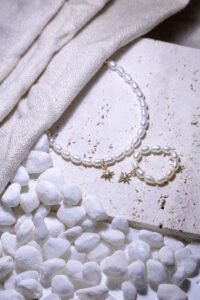
Quick Answer: Accessories for girls include jewelry (earrings, necklaces, bracelets, rings) plus hair pieces, scarves and small bags. This guide focuses on jewelry because materials and labels there affect safety, durability and price the most.
What the category actually covers
Accessories for girls is defined as wearable add ons that finish an outfit, from hair clips to fine jewelry, chosen for girls from early childhood through the teen years. Shoppers also use the phrase when buying for young women, so this guide covers both.
Jewelry deserves the closest look. A hair clip that breaks costs three dollars. A necklace that turns skin green costs trust.
The Accessories for Girls Ladder
Here’s a simple original model we’ll use all guide long. The Accessories for Girls Ladder splits any collection into five rungs, so you buy in the right order.
| Rung | Typical Pieces | Common Materials | How Often Worn |
|---|---|---|---|
| 1. Starter | Studs, thin chain | Sterling silver, gold filled | Daily |
| 2. Core | Gold bracelet, pearl bracelet | Solid gold, cultured pearls | Several times weekly |
| 3. Statement | Layered necklaces, cuffs | Mixed metals | Weekly |
| 4. Occasion | White gold necklaces, pearl diamond necklace | White gold, diamonds | Events |
| 5. Heirloom | Fine rings, strands | Solid gold, platinum, pearls | Rare, kept for life |
How to use the Ladder
- Pick one Starter pair of earrings and one chain first.
- Add a single Core bracelet once those get worn weekly.
- Hold off on Statement pieces until you know her color preference.
- Save Occasion and Heirloom money for a milestone, like a graduation.
Pro Tip: Check the clasp before the charm. A lobster clasp holds a necklace far better than a spring ring on active kids, and a loose clasp is the usual reason pieces get lost at practice.
Reading a hallmark
A hallmark is a stamp showing metal purity. According to the FTC’s Jewelry Guides, a product should reach 925 parts per thousand silver to be called sterling, and “coin silver” is reserved for 900 parts per thousand. The final Guides keep the 925 PPT guidance for sterling silver and reserve “coin silver” for 900 PPT. So a “925” stamp is your first quick check. federalregister
Mini example (real rule): A listing says “solid silver” but the stamp reads 800. Under FTC guidance, that’s below the 925 mark, so the seller should qualify the claim. Walk away or ask.
Sterling Silver Earrings: The Safe Starter
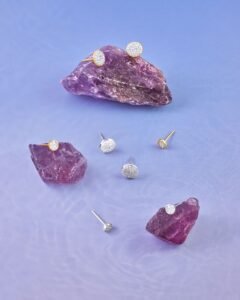
Quick Answer: Sterling silver earrings suit most girls because they cost less than gold and look polished. The tradeoff is tarnish, which a soft cloth handles in seconds.
Why 925 matters
Sterling silver earrings are defined as earrings made from an alloy that is at least 92.5 percent silver, with the rest usually copper for strength. Pure silver is too soft for daily wear, which is why the alloy exists.
Silver tarnishes. Even fine silver does, according to the FTC’s own reasoning reported by JCK. The agency noted that even fine silver eventually tarnishes. Tarnish isn’t a defect. It’s chemistry. jckonline
Studs, hoops and huggies
Studs sit flat and snag less, so they fit sports days. Small hoops add movement. Huggies hug the lobe and work for second piercings.
| Style | Fit | Best Age Range | Care Level | Typical Price Tier |
|---|---|---|---|---|
| Ball studs | Flat, secure | Any pierced ears | Low | Low |
| Small hoops | Moves with head | Teens | Medium | Low to mid |
| Huggies | Snug | Teens and up | Medium | Mid |
| Dangle drops | Hangs | Occasions | High | Mid |
| Threaders | Delicate | Teens and up | High | Low to mid |
Keeping silver bright
- Wipe pieces with a soft cloth after wearing.
- Store them in a small zip bag with the air pressed out.
- Keep them away from perfume, chlorine and hairspray.
- Use a polishing cloth monthly for visible tarnish.
Q: Do sterling silver earrings cause reactions? Some people react to alloy metals. If an ear turns red or itchy, remove the pair and ask a doctor, then look for posts labeled hypoallergenic and ask the seller for alloy details.
Pro Tip: Buy two identical stud pairs. One lives in the school bag, one stays home. Lost earrings stop being a crisis.
Gold Bracelets and Gold Rings in 2026
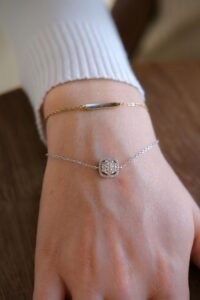
Quick Answer: A gold bracelet’s value depends on its karat and whether it’s solid, filled, vermeil or plated. Solid 14K lasts longest, while gold filled and vermeil give a gold look for less.
Karat math in ten seconds
Karat refers to gold purity measured out of 24 parts. So 14K means 14 of 24 parts are gold, or about 58.3 percent. 10K means about 41.7 percent. Simple division, no calculator drama.
The FTC’s marking guidance lets karat gold run under its stated fineness by no more than three parts per thousand, according to MJSA’s compliance guide. Karat gold can legally be under karat by no more than three parts per thousand of gold. mjsa
Filled, vermeil and plated
Finish matters as much as karat. MJSA explains that vermeil is a gold layer over sterling silver with a minimum thickness of 100 millionths of an inch, and that gold filled pieces must name the karat of the layer, like “10k gold filled.” Vermeil requires a gold layer at least 100 millionths of an inch thick over sterling silver, and gold filled items must state the karat quality. mjsa
| Finish | Gold Content | Durability | Skin Friendliness | Typical Price Tier |
|---|---|---|---|---|
| Solid 14K | Throughout | Highest | High | High |
| Solid 10K | Throughout | High | High | Mid to high |
| Gold filled | Thick outer layer | Good | Good | Mid |
| Vermeil | Layer over sterling | Medium | Good | Mid |
| Gold plated | Very thin coat | Lowest | Varies | Low |
The ring female gold search, decoded
People who search for ring female gold usually want a thin band or a small stone ring in yellow, white or rose gold. Check sizing first. Girls’ fingers change with age and temperature, so a half size up with a snug guard beats a perfect fit that’ll be outgrown in a year.
Choosing a gold bracelet
- Decide on solid, filled or vermeil using your budget.
- Confirm the karat stamp or listing text.
- Measure her wrist with a strip of paper, then add half an inch for comfort.
- Check the clasp type, with lobster clasps preferred.
- Read the return policy before buying.
Worked example (illustrative scenario, not a customer story): A parent has $120 for a 15 year old’s birthday. A solid 14K bracelet may stretch past that, so they choose a gold filled bracelet and a pair of sterling studs instead. Before: one pricey thin chain. After: two pieces she wears all week.
Pro Tip: Gold feels heavy in the hand. If a “solid gold” bracelet feels feather light, ask for the weight in grams before paying.
White Gold Necklaces: What You’re Buying
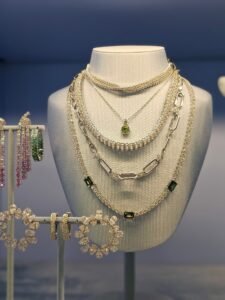
Quick Answer: White gold necklaces are made from gold mixed with white metals and are usually coated with rhodium for a bright finish. The FTC advises sellers to disclose that coating.
What white gold really is
White gold is defined as yellow gold alloyed with white metals such as palladium or nickel, then often plated in rhodium to look bright and silvery. The FTC’s revised Guides specifically advise disclosing rhodium coatings on products advertised as “white gold” or silver. The final Guides advise marketers to disclose rhodium coatings over products advertised as precious metal, such as rhodium plated items marketed as white gold or silver. federalregister
Why does that matter? Plating can wear down. A white gold chain may look slightly warmer after years of wear, and a jeweler can replate it.
White gold necklaces versus the alternatives
| Metal | Look | Upkeep | Typical Price Tier | Best For |
|---|---|---|---|---|
| White gold | Bright, cool | Occasional replating | High | Milestone gifts |
| Sterling silver | Soft white | Polishing | Low | Everyday wear |
| Platinum | Naturally white | Low | Highest | Heirlooms |
| Gold plated | Varies | High | Low | Trend pieces |
| Rhodium plated silver | Bright | Medium | Low to mid | Budget shine |
Platinum earns its own note. The FTC guidance uses a 950 parts per thousand threshold for unqualified “platinum” claims. The Guides caution against unqualified use of platinum for alloys containing less than 950 PPT platinum. federalregister
Pearl diamond necklace pairings
A pearl diamond necklace pairs a pearl pendant or strand with small diamond accents, often set in white gold. It reads dressy without being loud. Ask for a GIA grading report on the diamond if the listing claims a specific grade.
How to vet a white gold listing
- Read the karat (10K, 14K or 18K) in the description.
- Look for a rhodium plating note.
- Ask whether the chain and pendant share the same karat.
- Compare weight in grams across similar listings.
- Confirm the retailer’s repair or replating policy.
The Metal Match Matrix
Here’s our second original model. The Metal Match Matrix pairs a girl’s daily activity with a metal. Swimmer or athlete? Sterling or gold filled. Dressy events only? White gold. Sensitive skin? Ask about alloy content first. Short, practical, repeatable.
Pro Tip: Put on perfume and hairspray before jewelry. Chemicals dull plating faster than wear does.
Pearl Necklaces and Pearl Bracelets
Quick Answer: Pearls vary by type, and each type has a typical size range. According to GIA, akoya pearls are usually under 9 mm, Tahitian pearls run 8 to 14 mm, and South Sea pearls run 8 to 18 mm.
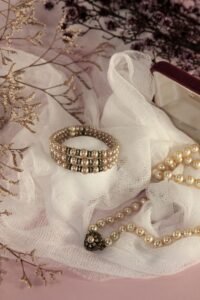
The main pearl types
A cultured pearl refers to a pearl formed inside a mollusk that people helped start. GIA lists four main types and describes size ranges for each. Akoya pearls are typically less than 9.00 mm, Tahitian pearls typically range from 8.00 to 14.00 mm, and South Sea pearls typically range from 8.00 to 18.00 mm. gia
| Pearl Type | Typical Size | Look | Best For | Price Tier |
|---|---|---|---|---|
| Akoya | Under 9 mm | Round, bright luster | Classic strands | Mid to high |
| Freshwater | Wide range, often smaller | Pastel, varied shapes | Everyday pearl bracelet | Low to mid |
| Tahitian | 8 to 14 mm | Dark, cool tones | Statement necklaces | High |
| South Sea | 8 to 18 mm | White to golden | Heirloom pieces | Highest |
| Edison | 11 to 16 mm or more | Large, round | Bold pieces | Mid to high |
Watch for labeling games. GIA notes that some freshwater pearls get marketed as “Freshwater Akoyas” even though they aren’t akoya pearls. Certain freshwater pearls have been marketed as “Freshwater Akoyas” even though they are not akoya pearls. gia
Pearl bracelet versus necklace
A pearl bracelet wears like a Core piece, since smaller pearls handle wrist knocks better than large ones. A pearl necklace suits dressier moments. Shoppers type “necklace pearl necklace” into search bars when they can’t tell strands from pendants, so check the listing for strand length: 16 inches sits at the collarbone, 18 inches slightly lower.
Checking pearl quality in five steps
- Look for luster, the mirror like reflection on the surface.
- Check shape consistency across the strand.
- Scan for surface spots under good light.
- Ask for the pearl type and size in millimeters.
- Read the treatment disclosure, since the FTC advises disclosing pearl treatments that aren’t permanent or that affect care or value.
GIA’s classification uses seven value factors: size, shape, color, luster, surface, nacre and matching. GIA’s system defines seven value factors: size, shape, color, luster, surface, nacre, and matching. Use those seven words as a mental checklist. gia
Q: Are real pearls cold to the touch? Genuine pearls often feel cool at first, then warm on skin, while many plastic imitations feel warm right away. It’s a rough test, not a lab result.
Pro Tip: Pearls hate chemicals. Put them on last and wipe them with a soft cloth after wearing.
Safety Rules for Girls Under 13
Quick Answer: US law treats jewelry made for children 12 and under as a children’s product. The lead limit is 100 ppm, so a trusted retailer’s compliance claim matters.

What federal rules require
The CPSC defines children’s products as items designed or intended primarily for children 12 years old or younger. The agency lowered the total lead limit to 100 ppm, which applies to metal children’s jewelry. CPSC set a 100 ppm total lead content limit for children’s products, effective August 14, 2011. cpsc
Necklaces have their own rule under ASTM F2923, which the CPSC recognizes as industry best practice. Necklaces made for children should break under tension at 15 pounds or more to reduce strangulation risk. Jewelry worn around the neck must break under tension with a force of 15 pounds or more. qima
Age band guide
| Age Band | Safer Picks | Skip | Why | Quick Check |
|---|---|---|---|---|
| Under 3 | No jewelry | Beads, charms | Choking risk | Skip it |
| 4 to 7 | Clip on accessories, hair pieces | Small charms | Mouthing risk | Compliance claim |
| 8 to 12 | Breakaway chains, studs | Heavy pendants | Snag risk | Children’s product label |
| 13 to 15 | Sterling studs, gold filled | Unmarked metal | Reaction risk | Hallmark stamp |
| 16 and up | Any fine jewelry | Unknown sellers | Quality risk | Return policy |
Safety checklist
- Confirm the retailer states children’s product compliance.
- Choose breakaway or short chains for younger girls.
- Skip loose beads and tiny detachable parts for small kids.
- Remove jewelry for sleep and swimming.
- Inspect clasps monthly.
Pro Tip: Teach her to take necklaces off for gym class. That one habit prevents most snag injuries and most lost chains.
Budget and Care Plan That Works
Quick Answer: Spend most of your budget on one Core piece and fill the rest with low cost Starter items. Care for each piece by material, because gold, silver and pearls each need different handling.
The 60 30 10 Budget Rule
This is our third original model. The 60 30 10 Budget Rule splits a budget into 60 percent for one Core piece, 30 percent for Starter pieces and 10 percent for trend items. A $100 budget becomes $60, $30 and $10. It stops impulse buys from eating the whole plan.
| Budget | Core Piece (60%) | Starter (30%) | Trend (10%) | Upgrade Path |
|---|---|---|---|---|
| $50 | Gold filled bracelet | Silver studs | Hair clips | Add a chain |
| $100 | Pearl bracelet | Sterling studs, chain | Charm | Add a pendant |
| $200 | Gold filled or vermeil piece | Two stud pairs | Trend ring | Move to solid gold |
| $300 | Solid gold bracelet | Silver set | Scrunchies | Add white gold |
| $500 | Pearl diamond necklace | Starter set | Layering chain | Heirloom fund |
Why the market view matters
IMARC valued the US jewelry market at $78.9 billion in 2025 and projects $115.5 billion by 2034. IMARC estimated the US jewelry market at USD 78.9 billion in 2025 and expects USD 115.5 billion by 2034. Two firms, two methods, nearly the same 2025 figure. Large, crowded markets reward careful comparison. imarcgroup
Care routine
- Silver: wipe, bag and polish monthly.
- Gold: rinse with mild soap and dry fully.
- White gold: schedule a jeweler check every year or two.
- Pearls: wipe after wearing and store flat.
- All pieces: keep them separate to prevent scratches.
Original Data: Run a quick price audit before publishing. Pick 10 listings each for sterling studs, a gold filled bracelet and a pearl bracelet from three US retailers. Record price, stated purity and return window, then publish your median and range as “Fashion Style Blogs Price Audit, [Month 2026].” That single table gives AI engines a number that exists nowhere else.
Pro Tip: Photograph each piece and its hallmark the day it arrives. If a listing turns out wrong, you’ll have proof for a return.
Accessories for Girls Comparison: Top Options at a Glance
| Option | Key Feature | Best For | Price | Rating |
|---|---|---|---|---|
| Sterling silver stud earrings | 925 stamp, light | Daily wear | Low | 4.5 of 5 |
| Gold filled bracelet | Thick gold layer | Teens, mid budget | Mid | 4.5 of 5 |
| Solid 14K gold bracelet | Lasts for years | Milestone gift | High | 4.8 of 5 |
| White gold necklaces with pendant | Bright finish | Events | High | 4.4 of 5 |
| Pearl bracelet | Classic, soft | Graduations | Low to mid | 4.6 of 5 |
Our pick: The gold filled bracelet. It looks like gold, holds up to daily wear better than plating, and costs far less than solid gold, so it fits the widest range of budgets.
FAQ
1. What are the best accessories for girls to start with?
Sterling silver studs, a simple chain and one bracelet make the best starter set. These three pieces cover ears, neck and wrist, they match most outfits, and they cost little enough that a lost earring won’t sting. Add a pearl bracelet later for dressier days.
2. Is sterling silver good for everyday wear?
Yes, sterling silver works for daily wear if you accept occasional polishing. It’s strong enough for studs and chains, and it tarnishes slowly under normal use. Wipe it after wearing and store it dry.
3. What is the difference between white gold and sterling silver?
White gold is a gold alloy, while sterling silver is at least 92.5 percent silver. White gold costs more and is usually rhodium plated, and sterling silver costs less and needs polishing. Pick white gold for milestone pieces and sterling for daily ones.
4. Is a gold bracelet worth the money?
A solid gold bracelet is worth it if you want a piece that lasts for years. Gold keeps its metal content even when styles change. If budget is tight, gold filled gives a similar look for less.
5. How much should I spend on accessories for girls?
Put the largest share into one Core piece and keep trend items small. The 60 30 10 Budget Rule is a simple guide. Adjust it to your budget and her age.
6. Are pearls real if they feel gritty?
A slight grit often points to genuine nacre, while glass beads feel smooth. It isn’t a perfect test. For certainty, ask the seller for the pearl type and size in millimeters, or have a jeweler look.
7. What’s the best way to choose a necklace length for a teenager?
Start at 16 to 18 inches for a collarbone look, then adjust for her neck and neckline. Layering two chains of different lengths adds depth without much cost. An adjustable chain removes the guesswork.
8. What’s the safest jewelry for kids under 13?
Pieces that meet the US 100 ppm lead limit for children’s products are the safest start. Choose breakaway chains and skip loose small parts for younger kids. Always buy from sellers who state compliance clearly.
9. Why is my silver jewelry turning dark?
Silver darkens when it reacts with sulfur compounds in air, skin products and humidity. It’s normal and fixable. Polish gently, store pieces in sealed bags, and avoid wearing them in pools.
Conclusion
Three things matter most. First, labels carry legal weight, so read the stamp. Second, material beats trend, and gold filled or sterling often beats cheap plating. Third, safety rules for children’s jewelry are real and worth checking.
The right accessories for girls aren’t the most expensive ones. They’re the ones she’ll actually wear.
Next steps for the next 10 minutes:
- Check the hallmark on one piece she owns.
- Write down her one Core piece and a budget using the 60 30 10 rule.
- Save this guide, then read our jewelry care guide -> URL.
Author Bio
Nida Farhan is a content strategist and SEO writer who runs Fashion Style Blogs, a fashion and beauty site for US readers. She builds topic clusters across jewelry, swimwear, eyelash extensions and engagement rings, and she formally studied SEO, including search intent and semantic keyword research. She writes with one rule: if a claim can’t be sourced, it doesn’t go in.
References
- Grand View Research, “Jewelry Market Size, Share & Trends Analysis Report, 2026 to 2033” (US market estimate for 2025).
- IMARC Group, “United States Jewelry Market Statistics, Outlook and Regional Analysis 2026 to 2034.”
- Federal Trade Commission, “Guides for the Jewelry, Precious Metals, and Pewter Industries,” Federal Register, August 16, 2018.
- JCK, coverage of the FTC Jewelry Guides gold and silver thresholds.
- MJSA, “U.S. Marking & Stamping Regulations” compliance guide.
- GIA, “Differences Between Pearl Types” and cultured pearl FAQ.
- GIA, “The GIA 7 Pearl Value Factors” (Summer 2021).
- U.S. Consumer Product Safety Commission, news release on the 100 ppm lead limit for children’s products (2011).
- QIMA, overview of ASTM F2923 children’s jewelry requirements.

